Silver Nitrate
MATERIAL SAFETY DATA SHEET
I. PRODUCT IDENTIFICATION
Manufacturer/Supplier:
ESPI Metals
1050 Benson Way, Ashland, OR 97520
Toll Free (800) 638-2581 * Fax (541) 488-8313
E-Mail: This email address is being protected from spambots. You need JavaScript enabled to view it.
Product Name: Silver Nitrate
Formula: AgNO3
CAS Number: 7761-88-8
II. HAZARDOUS INGREDIENTS
Hazardous Components: Silver Nitrate
Percent (%): 0-100
OSHA/PEL: 0.01 mg/m3
ACGIH/TLV: 0.01 mg/m3
HMIS Ratings:
Health: 2
Flammability: 0
Reactivity: 2
III. PHYSICAL DATA
Boiling Point: 444 oC
Melting Point: 212 oC
Specific Gravity: 4.352 g/cc
Solubility in H2O: Soluble
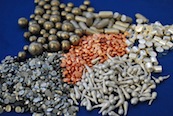
Appearance and Odor: White crystalline powder.
IV. FIRE AND EXPLOSION HAZARDS DATA
Flash Point: N/A
Autoignition Temperature: N/A
Flammable Limits: Upper: N/A Lower: N/A
Extinguishing Media: Water
Special Firefighting Procedures: Firefighters must wear full face, self-contained breathing apparatus with full protective clothing to prevent contact with skin and eyes.
Unusual Fire & Explosion Hazard: As an oxidizing agent silver nitrate will assist fire; toxic oxides of nitrogen fumes will be evolved above its melting point.
V. HEALTH HAZARD INFORMATION
Effects of Exposure:
To the best of our knowledge, the chemical, physical and toxicological properties of silver nitrate have not been thoroughly investigated and reported.
Caustic and irritating to the skin and mucous membranes. Absorption over a long period may cause argyria (grayish discoloration of various tissues). Industrial argyria may be local, involving formation of gray-blue particles on the skin or in the conjunctivae, or generalized, in which the uncovered skin becomes pigmented. Ingestion can cause severe gastroenteritis.
Acute Effects:
Inhalation: Caustic and irritating to the mucous membranes.
Ingestion: Large amounts of nitrates taken by mouth may have serious or even fatal results. The symptoms are dizziness, abdominal cramps, vomiting, bloody diarrhea, weakness, convulsions and collapse.
Skin: Caustic and irritating to the skin and mucous membranes. Absorption over a long period may cause argyria (grayish discoloration of various tissues). Industrial argyria may be local, involving formation of gray-blue particles on the skin or in the conjunctivae, or generalized, in which the uncovered skin becomes pigmented.
Eye: May cause irritation and pigmented.
Chronic Effects:
Ingestion: Small, repeated doses of nitrates may lead to weakness, general depression, headache and mental impairment. There is also some implication of increased cancer incidence among those exposed.
Most Likely Routes of Entry: Ingestion
Medical Conditions Generally Aggravated by Exposure: None known.
Carcinogenicity: IARC: No NTP: No OSHA: No
EMERGENCY AND FIRST AID PROCEDURES:
INHALATION: Remove to fresh air, keep warm and quiet, give oxygen if breathing is difficult and seek medical attention.
INGESTION: Seek immediate medical attention.
SKIN: When silver nitrate comes into contact with any part of the body it must immediately be washed off with large volumes of water. If irritation persists, or if skin blisters, seek medical attention.
EYE: Immediately flush eyes, including under eyelids, with large amounts of water for at least 20 minutes. Call a physician.
VI. REACTIVITY DATA
Stability: Stable
Conditions to Avoid: Discoloration upon exposure to light. Heat.
Incompatibility (Materials to Avoid): Reducing agents, organic compounds, bases, easily oxidized materials. Explosive compounds may be formed in the presence of ammonia.
Hazardous Decomposition Products: NOx, silver oxide.
Hazardous Polymerization: Will not occur
VII. SPILL OR LEAK PROCEDURES
Steps to Be Taken in Case Material Is Released or Spilled: Ensure adequate ventilation. Wearing full protective equipment, cover spill with dry sand or vermiculite. Mix well and carefully transfer to a container. Take care not to raise dust.
Waste Disposal Method: Ship to precious metal refiner. Dispose of in accordance with all State, Federal and Local regulations.
VIII. SPECIAL PROTECTION INFORMATION
Respiratory Protection: NIOSH approved high efficiency particle respirator.
Ventilation: Laboratory fume hood.
Protective Gloves: Neoprene
Eye Protection: ANSI approved safety goggles
Other Protective Equipment: Lab coat and apron, flame and chemical resistant coveralls, and protective gear suitable to prevent contamination.
IX. SPECIAL PRECAUTIONS
Precautions to Be Taken in Storage and Handling: Avoid contact with skin and eyes. Avoid inhalation. Silver nitrate should be stored in sealed containers or packages and not exposed to light. In view of its strong oxidizing properties silver nitrate must be stored away from flammable materials and ammonia, and in a cool, well ventilated area. Keep container tightly closed. Wash thoroughly after use.
Caution: Dust may be irritating to eyes and lungs.
Work Practices: Implement engineering and work practice controls to reduce and maintain concentration of exposure at low levels. Use good housekeeping and sanitation practices. Do not use tobacco or food in work area. Wash thoroughly before eating and smoking. Do not blow dust off clothing or skin with compressed air. Maintain eyewash capable of sustained flushing, safety drench shower and hygienic facilities for washing.
The above information is believed to be correct, but does not purport to be all inclusive and shall be used only as a guide. ESPI shall not be held liable for any damage resulting from handling or from contact with the above product.
Issued by: S. Dierks
Date: June 2003
 ALLOYS