Barium

Barium is a silver-white, somewhat malleable metal used in various alloys, for the production of evaporation getters (gas absorbers) in cathode ray tubes, in sodium vapor lamps, and in spark plugs. Barium is relatively abundant in nature and is found in plants and animal tissue. Barium is an alkaline earth metal, so-called because the alchemists referred to any nonmetallic substance insoluble in water and unchanged by fire as an “earth” and because the “earths” of this group give decidedly alkaline reactions. It quickly oxidizes in air and therefore has to be strictly kept under a protective inert medium like paraffin oil or argon gas. Barium is flammable at room temperature in powder form, and reacts violently with water, acids or alcohols, developing hydrogen and forming alkaline caustic decomposition products.

The toxicity of barium compounds depends upon their solubility. Soluble compounds are absorbed and small amounts are accumulated in the skeleton. The lung has an average concentration of 1 ppm (dry weight). The kidney, spleen, muscle, heart, brain and liver concentrations are all less than <0.11 ppm. Although barium is excreted in urine, it is reabsorbed by the renal tubules. The major route of excretion is the feces. Occupational poisoning from barium is uncommon. Accidental poisoning from ingestion of soluble barium salts has resulted in gastroenteritis, muscular paralysis, decreased pulse rate, and ventricular fibrillation and extrasystoles.

Typical Properties

  • Atomic Weight: 137.34
  • Specific Gravity: 3.6 gm/cc @ 20 oC
  • Melting Point Range: ~710 oC
  • Boiling Point Range: ~1500 oC
  • Electronic Coefficient (γ): 19 + 3 mJ/Kg ⋅ K2
  • Latent Heat of Fusion: 56.4 + 7.6 kJ/Kg
  • Latent Heat of Vaporization: 1290 kJ/Kg
  • Thermal Conductivity: 18.4 W/m ⋅ K
  • Temperature of Superconductivity: Ba II, ~1.3 K @ 5.5 GPa; Ba III, 3.05 K from 8.5-8.8, ~5.2 K for pressures >14.0 GPa
  • Coefficient of Expansion: (0-100 Oc) 18 x 10-6/K
  • Electrical Resistivity: 60 µΩ ⋅ cm @ oC. 133 µΩ ⋅ cm for liquid Ba
  • Magnetic Susceptibility: Molar: 1.254 mks @ oC
  • Thermal Neutron Cross Section (0.025 eV): Absorption, 1.3 b; Scattering, 8 b
  • Modulus: Bulk, 10.30 GPa; rigidity, 4.86 GPa
  • Poisson’s Ratio: 0.28

Home Page Content Under Periodic Table

ALLOYS

Click on the Alloy to go to the Online Catalog page.


Welcome to

ESPI was incorporated in 1950 with a mission to provide a competitive source for high purity metals, metal compounds and alloys. We are a valuable resource for virtually all major universities worldwide, global corporate R&D laboratories, thousands of domestic and international manufacturing companies and all U.S. government research laboratories. ESPI offers unique advantages often unavailable from larger organizations with no minimum order size & all business hour calls are handled by a competent sales representative. Automated answering systems and voice mail are not an option at ESPI.

Located within our fabrication facility is the melting department, forging & shaping areas, and the rod & wire, and sheet & foil departments providing the following manufacturing capabilities:

  • Casting of pure metals and alloys
  • Vacuum arc melting
  • Induction melting
  • Rod and wire drawing/extrusion
  • Sheet, foil and ribbon rolling
  • CNC milling and machining

Tel: 541-488-8311 - Email: sales@espimetals.com - or click the "Live Help/Chat Now" icon, upper right.


FORMS

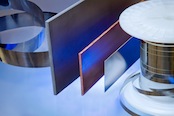
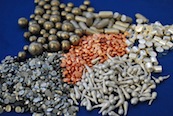
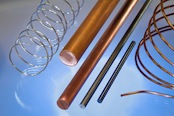
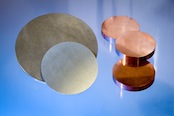
ESPI produces and sells 68 elements and dozens of alloys in various forms for your custom needs. Click on the forms below to be directed to detailed information on manufacturing.


At We Keep Good Company


Aerospace and Defense
Northrop Grumman, Hewlett Packard, IBM, Lockheed-Martin, Hughes, Boeing, General Dynamics, Aerojet, Litton, General Electric


Medical Instruments & Technology
Cintron, Hologic/Lorad, Varian, Siemens Medical, St Jude Medical, ArthroCare, GE Medical, Harvard Medical School, City of Hope Medical Center, American Medical Systems, Cedars Sinai Medical Center


International
Atomic Energy of Canada, CNRS, European Synchrotron Radiation Facility, INRS, Alberta Research Council, National Research Council of Canada, UNAM, CISRO, CERN


Education
Stanford, UCLA, Harvard, Georgia Institute of Technology, Cal Tech, Johns Hopkins University, University of Arizona, Penn State, University of Michigan, Princeton, Yale, University of Wollongong, University of Tokyo, University of Toronto, Tulane, University of New South Wales, Max-Planck Institute, University of Freiburg


Government Research Labs
JPL, Los Alamos National Lab, Battelle Pacific NW National Lab, US Department of Energy, Argonne National Lab, Brookhaven National Lab, Naval Oceans Systems Center, US Air Force, Lawrence Berkeley National Lab, NASA


Green Energy
Origin Energy Solar, First Solar, Schott Solar, SunPower Corporation, and many others.