Tellurium Copper

Tellurium copper’s resistance to hydrogen embrittlement and high conductivity make it a good choice for electrical applications, especially those which require extensive machining. The addition of tellurium to copper results in short, clean chips and allows cutting speeds of five times those used with pure copper, with much less wear on tool life. Also, the electrical conductivity, thermal conductivity and ductility are only slightly altered from pure copper. Typical applications include welding tips, switch gears, bolts and studs, and relay parts.

Typical Analysis in Percent:

              Copper (including tellurium)           Min. 99.9

              Phosphorus                                0.004 - 0.012

              Tellurium                                      0.4 - 0.7

Typical Physical Properties:

Electrical Conductivity: 90% IACS

Thermal Conductivity: 205 BTU/ft2/ft/hr/oF

Softening Temperature: Approximately 350 oC

Hot Formability: Good

Cold Formability: Good

Machinability (Free Cutting Brass = 100): 90

Soldering: Excellent

Brazing: Good

Welding:

       Oxy-acetylene Welding:          Not Recommended

       Metal-arc Welding:                 Not Recommended

       Gas-shielded-arc Welding:      Fair

       Resistance Welding:               Not Recommended

       Resistance Butt Welding:        Fair

Typical Mechanical Properties:

                       Size             Tensile            Yield                 Elongation

                           Range          Strength        Strength

Temper               (in.)               (ksi)               (ksi)                (%)

Half Hard          1/16 to ¼              38                   30                     8

                      over ¼ to 2⅝          38                   30                    12


Hard                1/16 to ¼               48                  40                      4

                     over ¼ to 1¼           44                  38                      8

                     over 1¼ to 3            40                  35                      8

Home Page Content Under Periodic Table

ALLOYS

Click on the Alloy to go to the Online Catalog page.


Welcome to

ESPI was incorporated in 1950 with a mission to provide a competitive source for high purity metals, metal compounds and alloys. We are a valuable resource for virtually all major universities worldwide, global corporate R&D laboratories, thousands of domestic and international manufacturing companies and all U.S. government research laboratories. ESPI offers unique advantages often unavailable from larger organizations with no minimum order size & all business hour calls are handled by a competent sales representative. Automated answering systems and voice mail are not an option at ESPI.

Located within our fabrication facility is the melting department, forging & shaping areas, and the rod & wire, and sheet & foil departments providing the following manufacturing capabilities:

  • Casting of pure metals and alloys
  • Vacuum arc melting
  • Induction melting
  • Rod and wire drawing/extrusion
  • Sheet, foil and ribbon rolling
  • CNC milling and machining

Tel: 541-488-8311 - Email: sales@espimetals.com - or click the "Live Help/Chat Now" icon, upper right.


FORMS

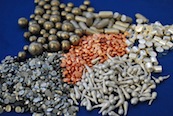
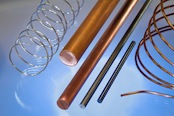
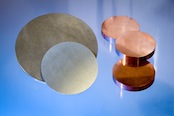
ESPI produces and sells 68 elements and dozens of alloys in various forms for your custom needs. Click on the forms below to be directed to detailed information on manufacturing.


At We Keep Good Company


Aerospace and Defense
Northrop Grumman, Hewlett Packard, IBM, Lockheed-Martin, Hughes, Boeing, General Dynamics, Aerojet, Litton, General Electric


Medical Instruments & Technology
Cintron, Hologic/Lorad, Varian, Siemens Medical, St Jude Medical, ArthroCare, GE Medical, Harvard Medical School, City of Hope Medical Center, American Medical Systems, Cedars Sinai Medical Center


International
Atomic Energy of Canada, CNRS, European Synchrotron Radiation Facility, INRS, Alberta Research Council, National Research Council of Canada, UNAM, CISRO, CERN


Education
Stanford, UCLA, Harvard, Georgia Institute of Technology, Cal Tech, Johns Hopkins University, University of Arizona, Penn State, University of Michigan, Princeton, Yale, University of Wollongong, University of Tokyo, University of Toronto, Tulane, University of New South Wales, Max-Planck Institute, University of Freiburg


Government Research Labs
JPL, Los Alamos National Lab, Battelle Pacific NW National Lab, US Department of Energy, Argonne National Lab, Brookhaven National Lab, Naval Oceans Systems Center, US Air Force, Lawrence Berkeley National Lab, NASA


Green Energy
Origin Energy Solar, First Solar, Schott Solar, SunPower Corporation, and many others.