Kovar

Kovar is an iron-nickel-cobalt alloy with a coefficient of thermal expansion similar to that of hard (borosilicate) glass. This makes it especially suitable for uses which require a matched-expansion seal between metal and glass parts. Thus kovar finds wide usage in the electronics industry for metal parts bonded to hard glass envelopes for such devices as power tubes, x-ray tubes, etc., and other applications requiring glass-to-metal seals.


Typical Analysis

          Ni               29                    Co               17

          Fe            Balance               Si                0.10

          Mn             0.30                   C                0.02 maximum


Typical Physical Properties

Density:                        0.302 lb/in3

Specific Gravity:            8.36 g/cc

Curie Temperature:       435 oC / 815 oF

Melting Point:                1450 oC / 2640 oF

Specific Heat:               0.105 cal/gm/ oC at 0 oC

                                     0.155 cal/gm/ oC at 430 oC

Thermal Conductivity:  17.3 W/m ⋅ K

Electrical Resistivity:   49 microhm/cm


Typical Mechanical Properties

Shear Modulus:              7,500 ksi

Modulus of Elasticity:     20,000 ksi

Ultimate Strength:         75,000 psi

Yield Strength:              50,000 psi

Poisson’s Ratio:             0.317

Elongation:                    30%

Hardness (Rockwell B): 78

Coefficient of Thermal Expansion (Nominal):

        30 oC - 400 oC              4.90 (µm/m- oC)

        25 oC - 300 oC              5.13

        30 oC - 450 oC              5.30

        25 oC - 100 oC              5.86

        25 oC - 500 oC              6.15

              25 oC - 900 oC            11.26


Heat Treatment

Because of its effect on the actual structure of the material, there is a distinction made between heat treating the material to facilitate fabrication and heat treating the material to ensure optimum conditions for glass sealing, plating or brazing.


Stress Relief Annealing

 To relieve stress and work hardening of parts at intermediate stages of fabrication. It is intended particularly for drawing, forming and spinning operations.

              1.   Wash and degrease parts.

              2.   Anneal in atmosphere controlled furnace. Atmosphere may be wet or dry hydrogen, dissociated ammonia, cracked gas or similar neutral atmosphere.

              3.   Annealing temperature is not critical; however, high temperatures (greater than 900 oC) or extended time periods (longer than 60 minutes) should be avoided because such treatments promote grain growth. Typical cycle: 850 oC for 30 minutes.

              4.   Parts should be held at temperature for the indicated time and then furnace cooled to less than 175 oC to avoid oxidation and/or thermal shock (which may cause distortion).


Heat Treatment for Oxidation

              1.   Make sure that proper methods are used to clean, degrease and bright dip parts.

              2.   Oxidation - Heat treat in an electric air furnace to 850 oC to 900 oC until parts are cherry red (dull red heat). The length of heat cycle is approximately 3 minutes, but due to differences in humidity and furnaces, the proper cycle has to be varied. Then reduce heat approximately 10 oC per minute. When parts are cooled, oxide will be formed. The oxide may appear from light grey to black in color. Black is normally considered to be over oxidation and is not necessarily desirable for a good glass to metal seal.


*Kovar is a registered trademark of CRS Holdings, Inc., a subsidiary of Carpenter Technology Corp.

Home Page Content Under Periodic Table

ALLOYS

Click on the Alloy to go to the Online Catalog page.


Welcome to

ESPI was incorporated in 1950 with a mission to provide a competitive source for high purity metals, metal compounds and alloys. We are a valuable resource for virtually all major universities worldwide, global corporate R&D laboratories, thousands of domestic and international manufacturing companies and all U.S. government research laboratories. ESPI offers unique advantages often unavailable from larger organizations with no minimum order size & all business hour calls are handled by a competent sales representative. Automated answering systems and voice mail are not an option at ESPI.

Located within our fabrication facility is the melting department, forging & shaping areas, and the rod & wire, and sheet & foil departments providing the following manufacturing capabilities:

  • Casting of pure metals and alloys
  • Vacuum arc melting
  • Induction melting
  • Rod and wire drawing/extrusion
  • Sheet, foil and ribbon rolling
  • CNC milling and machining

Tel: 541-488-8311 - Email: sales@espimetals.com - or click the "Live Help/Chat Now" icon, upper right.


FORMS

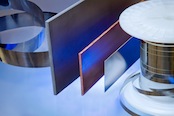
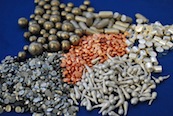
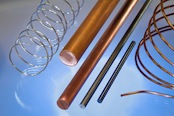
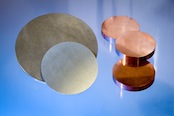
ESPI produces and sells 68 elements and dozens of alloys in various forms for your custom needs. Click on the forms below to be directed to detailed information on manufacturing.


At We Keep Good Company


Aerospace and Defense
Northrop Grumman, Hewlett Packard, IBM, Lockheed-Martin, Hughes, Boeing, General Dynamics, Aerojet, Litton, General Electric


Medical Instruments & Technology
Cintron, Hologic/Lorad, Varian, Siemens Medical, St Jude Medical, ArthroCare, GE Medical, Harvard Medical School, City of Hope Medical Center, American Medical Systems, Cedars Sinai Medical Center


International
Atomic Energy of Canada, CNRS, European Synchrotron Radiation Facility, INRS, Alberta Research Council, National Research Council of Canada, UNAM, CISRO, CERN


Education
Stanford, UCLA, Harvard, Georgia Institute of Technology, Cal Tech, Johns Hopkins University, University of Arizona, Penn State, University of Michigan, Princeton, Yale, University of Wollongong, University of Tokyo, University of Toronto, Tulane, University of New South Wales, Max-Planck Institute, University of Freiburg


Government Research Labs
JPL, Los Alamos National Lab, Battelle Pacific NW National Lab, US Department of Energy, Argonne National Lab, Brookhaven National Lab, Naval Oceans Systems Center, US Air Force, Lawrence Berkeley National Lab, NASA


Green Energy
Origin Energy Solar, First Solar, Schott Solar, SunPower Corporation, and many others.